
Description
Photos
Documents
Score card
Description
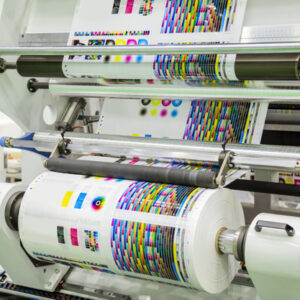
Modern offset printing is done on a press composed basically of three rotating cylinders: a plate cylinder, to which the metal plate is fastened; a blanket cylinder covered by a sheet of rubber; and an impression cylinder that presses the paper into contact with the blanket cylinder. The plate cylinder first comes in contact with a series of moistening rollers that deposit moisture in the granulations of the metal. A series of inking rollers then pass over the plate, and the ink is rejected by the water-holding areas and accepted by the greasy image. The inked image is transferred to the rubber blanket and is then offset to the paper travelling around the impression cylinder.
What are the Advantages of Offset Printing:
- Large quantities can be printed cost effectively
- The more you print, the cheaper the price per piece
- A large variety of paper types with custom finishes can be used
- Special custom inks such as metallic and Pantone colors are available
- Highest possible printing quality, with greater detail and color fidelity
Photos

Documents
Score card