
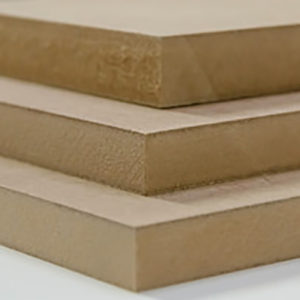
Description
Photos
Documents
Score card
Description
Benefits
- Is an excellent substrate for veneers
- Some varieties are less expensive than many natural woods
- Consistent in strength and size
- Shapes well
- Stable dimensions (less expansion and contraction than natural wood)
- Takes paint well
- Takes woodglue well
- High screw pull-out strength in the face grain of the material
Drawbacks
- Denser than plywood or chipboard (the resins are heavy)
- Low grade MDF may swell and break when saturated with water
- May warp or expand in humid environments if not sealed
- May release formaldehyde, which is a known human carcinogen and may cause allergy, eye and lung irritation when cutting and sanding
- Dulls blades more quickly than many woods. Use of tungsten carbide edged cutting tools is almost mandatory, as high speed steel dulls too quickly
- Though it does not have a grain in the plane of the board, it does have one intothe board. Screwing into the edge of a board will generally cause it to split in a fashion similar to delaminating
Photos
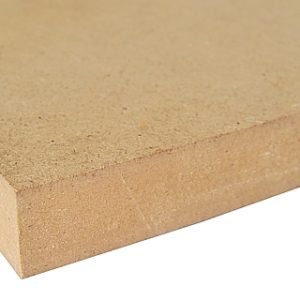

Documents
Score card
Our index:
Sustainability index:
price index: